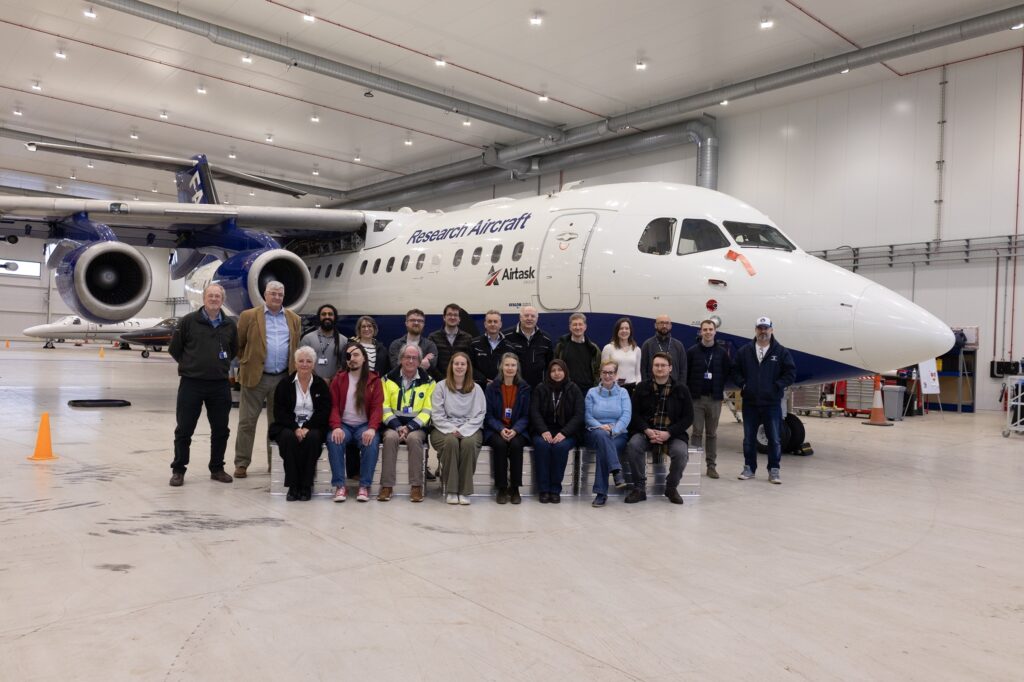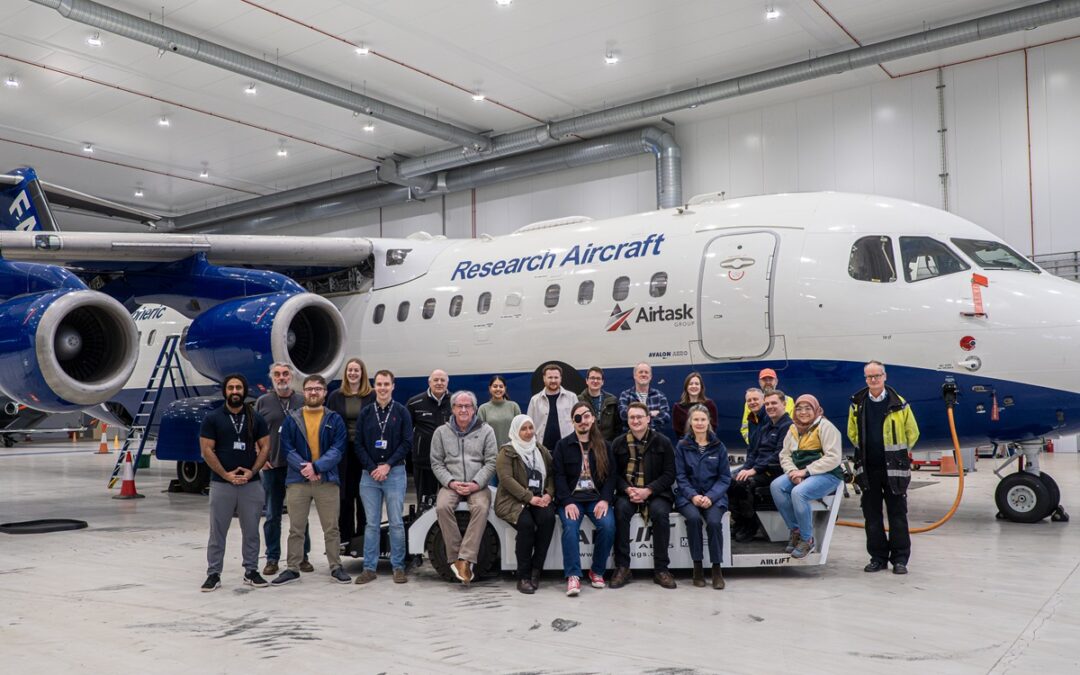
The National Centre for Atmospheric Science can confirm that the FAAM Airborne Laboratory has now formally closed and all operational activity ended on 31 March 2026 – following the UKRI-NERC funding withdrawal.
We continue to work with UKRI-NERC, our host institutions, delivery partners, and the wider user community to manage the post-closure period. Our priorities remain the wellbeing of staff, and the continued integrity of UK atmospheric science capability during this period.
And as we mark the closure of the FAAM Airborne Laboratory, we want to express our deepest gratitude to every individual, partner, and organisation that has shaped its remarkable 22 year journey. Together, you have built and sustained a one-of-a-kind airborne research facility.
Over two decades, the FAAM Airborne Laboratory has supported over 120 science projects, reaching five continents and more than 30 countries, working alongside 170 partner organisations worldwide. These collaborations enabled scientists to explore the atmosphere in extraordinary detail – from storm processes and cloud physics to greenhouse gases, pollution sources, and the dynamics of weather systems.
The FAAM community’s collective work has produced a lasting scientific legacy. Data collected by FAAM has contributed to over 500 publications and fed directly into major climate, weather, and air pollution models and government policies in the UK and internationally. In times of urgent need – during volcanic eruptions, industrial incidents, and environmental crises – FAAM’s unique capabilities delivered vital insights that informed national responses and protected people and places.
None of this would have been possible without the dedication, passion, ingenuity, and professionalism of the FAAM community: the scientists, engineers, technicians, data specialists, flight crews, operations teams, partner institutions, and collaborators in the UK and around the world. We would also like to recognise the longstanding contributions of BAE Systems, Avalon Aero, Airtask, Cranfield Airport and Cranfield University. They have all maintained an airborne measurement capability that has served cutting‑edge environmental science, through many challenges and milestones.
We want to acknowledge not only their technical excellence, but also the spirit of collaboration, resilience, and shared purpose that defined FAAM. Whether preparing instruments in ground laboratories, designing complex flight plans, supporting global campaigns, or guiding early‑career researchers, their commitment has made a profound contribution to atmospheric science and to society.
We are deeply proud of all that FAAM has achieved. The impact of FAAM’s work will continue to shape scientific innovation for years to come.
Thank you.